Guides/Planning·7 min read·Updated September 4, 2026
A smooth installation day starts before the crew arrives. Here is what Waterloo Region homeowners can do ahead of time to help the process go quickly and produce a better result.
Key takeaways
- 1Clearing access to the yard, driveway and any areas near the house lets the installation crew move ladders and equipment without delay.
- 2Checking exterior outlets ahead of time and noting which ones work saves troubleshooting time on installation day.
- 3Homeowners do not need to decide every design detail in advance; a walkthrough with the crew or an earlier design conversation covers colour choices, tree wraps and layout.
- 4Trimming back overgrown shrubs or branches near the roofline and gutters gives the crew clear access to where lights actually attach.
- 5Booking early, ideally by late September or October, gives more flexibility over installation timing before the fall calendar fills.
Most of the work involved in a professional Christmas light installation happens on the day the crew arrives, but a homeowner can make that day faster, smoother and ultimately produce a better-looking result with a small amount of preparation beforehand. None of it is complicated, and Classic Christmas Lighting's full-service approach means the vast majority of the planning still happens on our end. Still, a handful of simple steps ahead of time make a real difference, particularly for homes with larger properties, mature trees, or driveways that double as the main access point for ladders and equipment.
Clear access around the house
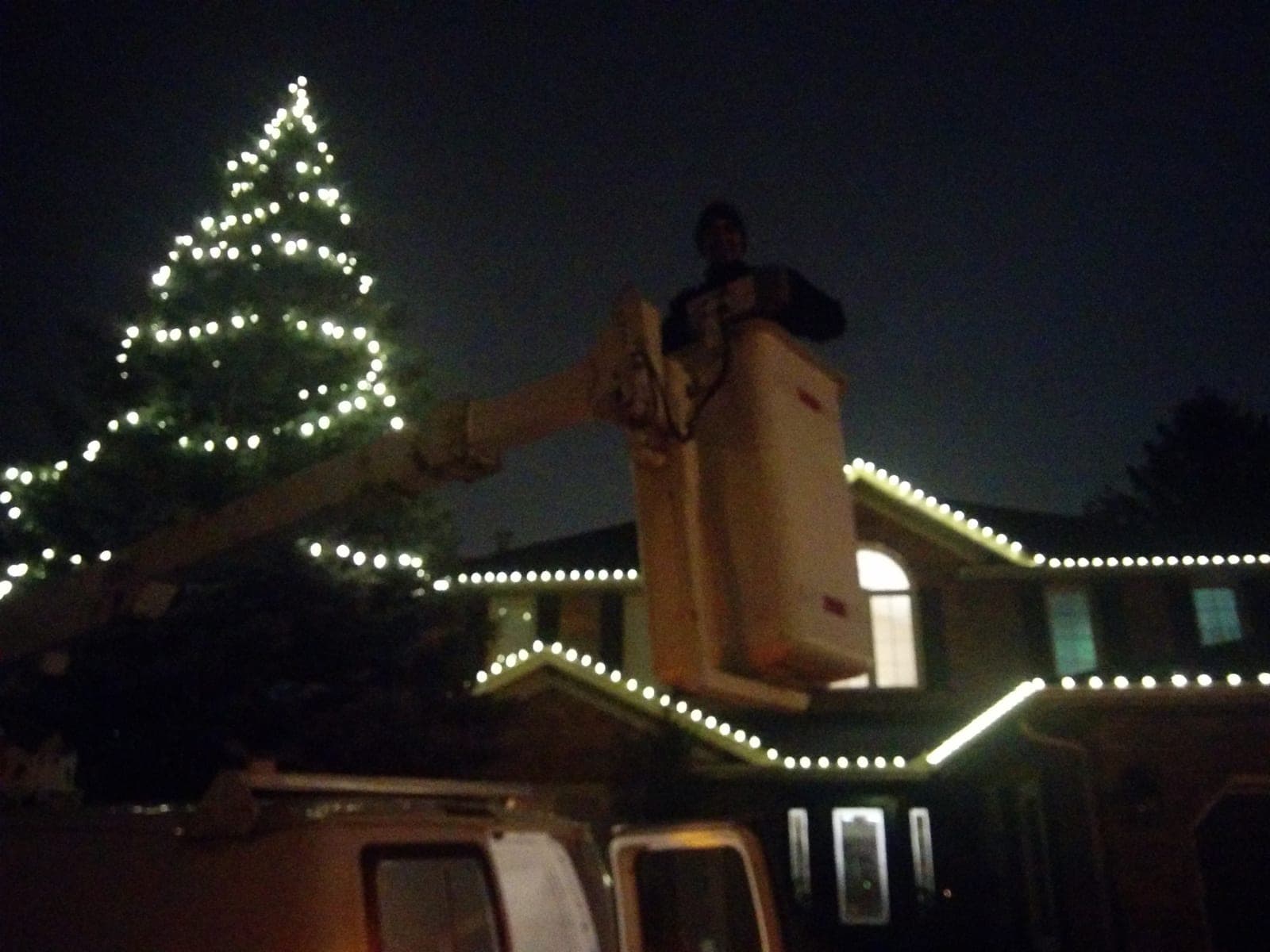
The single most useful thing a homeowner can do before installation day is make sure the crew can actually get to every part of the house that needs lighting. That means clearing vehicles out of the driveway if possible, moving patio furniture, toys, garden hoses, or anything else sitting near the foundation, and making sure gates to the backyard are unlocked and accessible. Crews working with ladders and, for taller homes, lifts need a clear path around the perimeter of the house, and anything blocking that path either slows the job down or, in some cases, means a section of the house has to be worked around less efficiently than planned.
This matters just as much for side yards and back decks as it does for the front of the house. If the display includes tree wraps in the backyard, or lighting along a rear deck or pergola, that access needs to be just as open as the front entrance. A five-minute walk around the property to clear obvious obstacles the day before installation saves real time once the crew arrives, and time saved on access is time the crew can spend on the actual installation and finishing details instead.
Check your exterior outlets
Christmas lighting needs power, and knowing which exterior outlets on the house are working, and where they are located, is genuinely useful information for the crew. Homes with older or infrequently used exterior outlets sometimes have one that has stopped working, tripped a GFCI breaker months ago, or simply was never wired the way the homeowner assumed. Testing exterior outlets with something simple, like a phone charger or a small lamp, before installation day flags any issue early rather than mid-installation, when troubleshooting an electrical problem eats into the time meant for the display itself.
If a home has multiple exterior outlets, noting which ones are closest to where the display will go, such as near the garage for a roofline run or near a side door for a tree wrap, helps the crew plan cord routing efficiently from the start. This is a small detail, but on larger homes with more extensive displays, efficient power planning affects both how clean the final installation looks and how quickly it comes together.
You do not need to have every design decision made
One thing that surprises a lot of first-time customers is how little they need to have decided before the crew shows up. Classic Christmas Lighting handles design as part of the full-service installation, whether that conversation happens ahead of time over the phone, during a quote request at /contact, or as part of a walkthrough on installation day itself. Homeowners do not need to arrive at a finished vision involving exact bulb colours, precise tree wrap patterns, or a fully sketched layout before booking.
That said, having a general sense of direction helps speed up the walkthrough. Thinking through a few basic preferences in advance, such as warm white versus multicolour, whether trees in the front yard should be wrapped, or whether the display should extend to a detached garage or fence line, gives the crew a starting point to build from rather than starting the design conversation completely from scratch on-site. For homeowners interested specifically in residential lighting design, more detail on what is typically included is covered at /services/christmas-lighting-for-homes.
Trim back what's in the way
Overgrown shrubs pressed up against the foundation, low-hanging branches near the roofline, or hedges that have crept over a walkway all create obstacles for a crew trying to run lights cleanly along a gutter line or up into a tree canopy. Trimming these back before installation day, where it is safe and reasonable to do so, gives the crew clear physical access to the exact points where lights need to attach, whether that is gutter clips along a roofline or branches that need to be wrapped for a tree lighting display.
This is particularly relevant for tree wraps. A tree with a dense, overgrown canopy or low branches tangled with a neighbouring shrub takes longer to wrap cleanly and can produce a less even final look than a tree that has had some basic seasonal maintenance beforehand. Homeowners planning a trunk or canopy wrap as part of their display, detailed further at /services/tree-lighting-services, will generally see a cleaner result if the tree itself has had a normal fall trim before the crew arrives.
Think about pets and children on installation day
Installation involves ladders, cords, and crew members moving around the exterior of the house for a period of time, so it is worth thinking ahead about where pets will be during that window. A dog that normally has free run of the backyard, or that tends to bark at or approach strangers near the fence line, is easier to manage if kept indoors or in a separate area while the crew works. The same goes for young children who might be curious about equipment or ladders set up around the yard. This is less about strict rules and more about making the day go smoothly for everyone involved, crew included.
Timing your booking matters more than timing your prep
While the preparation steps above help on the day itself, the single biggest factor in how smoothly the whole process goes is when you book. Classic Christmas Lighting, like most installation companies in Waterloo Region, works through a seasonal calendar that fills gradually from early fall through to the busiest weeks in November. Reaching out by late September or early October generally means more flexibility in choosing an installation date and more time for a relaxed design conversation before the season gets busy. Booking later in the fall is still possible, but the available dates narrow considerably, and installation may land later in the season than a homeowner would otherwise prefer.
This is worth mentioning because a lot of the preparation advice above only matters once a date is actually on the calendar. A homeowner who trims their shrubs and tests their outlets in October but has not yet booked a slot is still ahead of someone who calls in late November looking for a same-week appointment. Getting a free quote at /contact early in the fall protects both the timing and the flexibility that make everything else in this list worthwhile.
What happens after installation
Once the crew has been through and the display is up, the work is not entirely finished for the season. Classic Christmas Lighting includes mid-season maintenance as part of full-service installation, meaning a follow-up check partway through the season to catch anything a windstorm, heavy snow load, or a stray strand connection has knocked loose. After the holidays, takedown and storage are handled the same way installation was, without the homeowner needing to get back up on a ladder in January to bring everything down. Knowing that maintenance and takedown are already covered is one more reason the upfront preparation described here is worth the modest effort; it is a small amount of work on the front end in exchange for a fully managed display for the rest of the season.
A quick pre-installation checklist
Pulling all of this together, a homeowner preparing for installation day in Kitchener, Waterloo, Cambridge, Guelph, Hamilton, Woodstock or Stratford can focus on a short list: clear driveway and yard access, unlock gates, test exterior outlets, trim overgrown shrubs and low branches near the roofline or trees to be wrapped, think through basic design preferences even if loosely, and plan where pets will be during the work. None of these take more than an hour combined, and together they help the crew move efficiently and deliver a cleaner, better-planned display. For anything not covered here, or to get the booking process started, reach out through /contact or call (226) 476-2038.
Frequently asked questions
How much notice do I need to give before an installation day?
There is no strict minimum, but booking by late September or early October generally provides the widest choice of installation dates. Later fall bookings are still accepted, but available dates become more limited as the season progresses.
Do I need to know exactly what I want before the crew arrives?
No. Design is part of the full-service installation, and preferences like bulb colour, tree wraps and overall layout can be discussed ahead of time or worked through with the crew during the walkthrough on installation day.
What should I do with my pets on installation day?
Keeping pets indoors or in a separate area of the yard while the crew is working around ladders and equipment tends to make the day easier for everyone, including the pets themselves.
Do I need to test my own outlets before installation?
It helps. Testing exterior outlets ahead of time and noting which ones work saves troubleshooting time on the day of installation, though the crew can also identify and work around outlet issues on-site if needed.
What if my trees or shrubs are overgrown near the house?
Trimming back overgrown branches and shrubs near the roofline, gutters or any trees being wrapped gives the crew clearer access and generally results in a cleaner final installation.
Does preparation affect the price of the installation?
Pricing is based on the scope of the property, such as roofline length and number of trees, not on how much preparation the homeowner has done. Preparation affects how smoothly the day goes, not the quoted cost.
Free quote
Want us to just handle it?
Send a photo of the house and we will come back with a price within a business day.
Keep reading
Planning · 8 min
What to Expect From a Professional Christmas Light Install in Waterloo Region
From the first phone call to the January takedown, here is what actually happens when a professional crew installs your Christmas lights in Kitchener-Waterloo, Cambridge or the surrounding towns.
Costs · 7 min
How Christmas Light Installers Price a Home in Kitchener-Waterloo
There is no flat rate for Christmas light installation because no two Kitchener-Waterloo homes are shaped the same way. Here is what actually goes into a quote.
Design · 7 min
LED vs Incandescent Christmas Lights for Ontario Winters
Warm incandescent glow or crisp, efficient LED. Here is how the two technologies actually hold up through a Waterloo Region winter, and how the choice shapes the finished look.